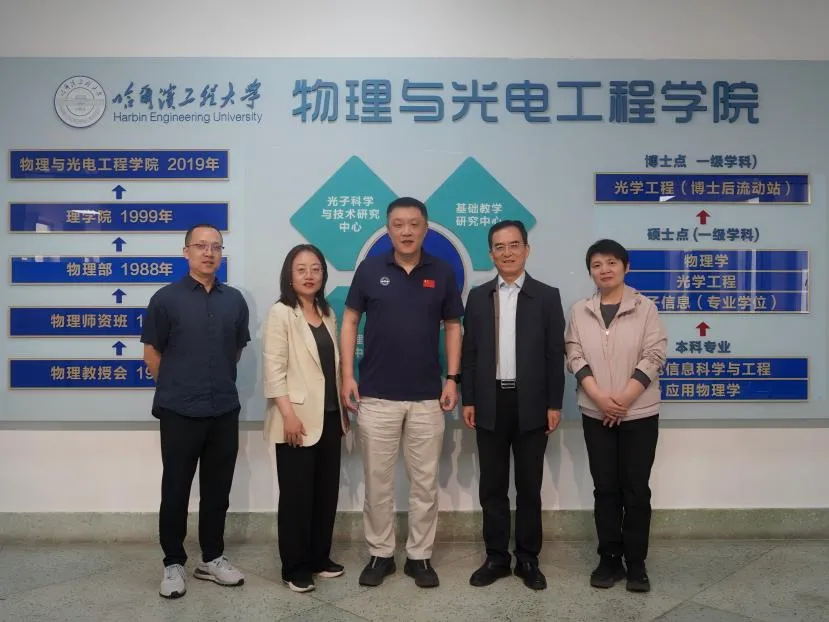
On May 15, the “Science Light” Scientists Forum academic lecture hosted by the College of Physics and Optoelectronic Engineering of Harbin Engineering University was held in Room 212 of the Science Building. Professor Pan Shilie, Director of the Xinjiang Technical Institute of Physics and Chemistry, Chinese Academy of Sciences, and Director Lu Juanjuan were invited to visit. The academic lecture was chaired by Liu Zhihai, Dean of the College of Physics and Optoelectronic Engineering, with faculty and students from relevant fields participating in the study and exchange.
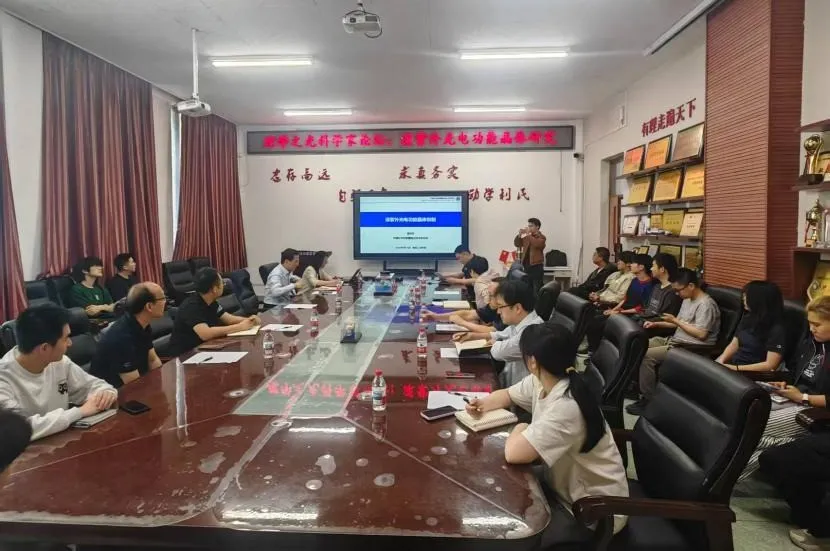
In his report, Pan Shilie delivered an in-depth exposition on the core value of deep-ultraviolet nonlinear optical crystals, clearly defining their important role as core components for short-wavelength coherent light sources. He systematically analyzed the core scientific issue of balancing three key parameters: band gap, nonlinear optical coefficient, and birefringence. He introduced in detail the innovative research approach of incorporating fluorine atoms into the borate system and shared achievements in the design, synthesis, and performance breakthroughs of a new series of fluorinated borate crystals. These materials have effectively broken through the performance bottleneck of deep-ultraviolet optical materials, demonstrating broad application prospects in the field of deep-ultraviolet optics.
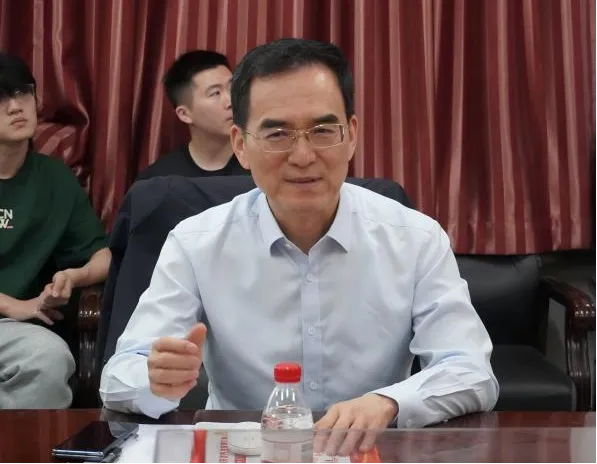
During the exchange session, Pan Shilie and the attending faculty conducted in-depth discussions on several academic topics, including the development trend of ultrafast laser technology, frequency conversion applications of deep-ultraviolet nonlinear optical crystals, comparative applications of glass, crystals, and two-dimensional materials in the deep-ultraviolet laser field, and the effects of fluorine-oxygen substitution and ammonium ion substitution on the stability of ABF crystals. The atmosphere was filled with strong academic interest and lively interaction.
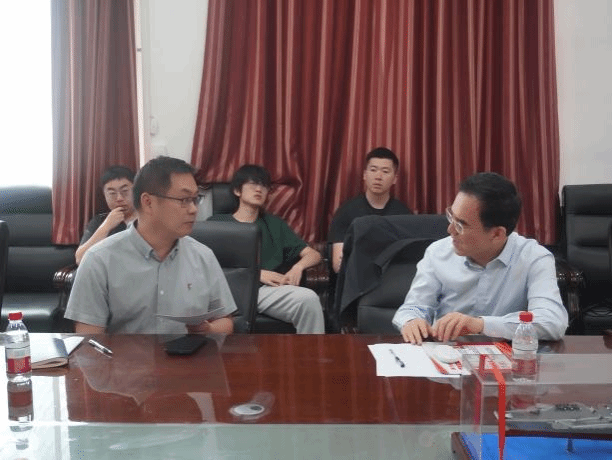
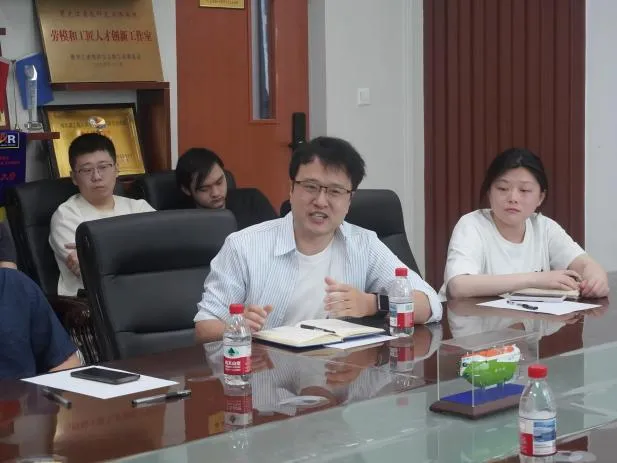
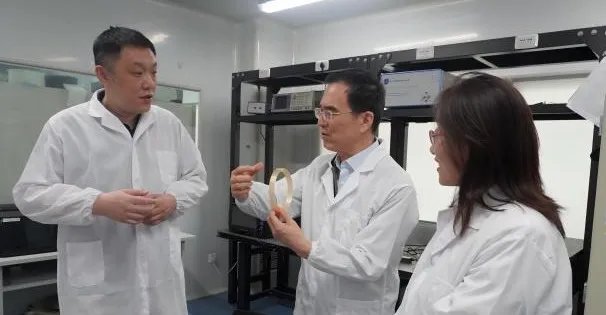
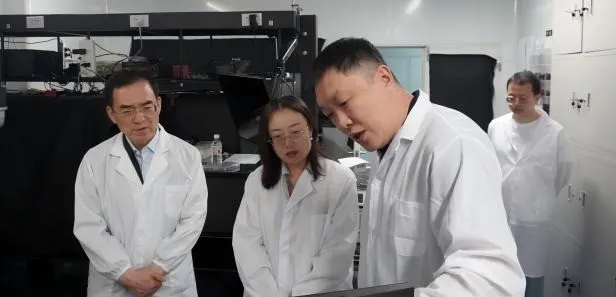
After the lecture, Pan Shilie and the delegation visited the college’s relevant research laboratories. They gained on-site understanding of the construction of high-level scientific research platforms and significant research progress in areas such as scintillation glass, specialty optical fiber materials, and fiber optic sensor devices. This visit laid a solid foundation for future frontier academic exchanges, outstanding talent cultivation, and high-quality scientific research cooperation between the two sides.
Pan Shilie holds a Ph.D. in Science and serves as a Research Fellow and Doctoral Supervisor. He is a national-level leading talent and a Fellow of the Royal Society of Chemistry. Currently, he is the Director of the Xinjiang Technical Institute of Physics and Chemistry, Chinese Academy of Sciences, and the Director of the CAS Key Laboratory of Functional Materials and Devices for Special Environments. He has been engaged in the research of inorganic optoelectronic functional crystal materials for a long time. He has published over 700 SCI papers in high-level journals such as “Nature” and “Nature Photonics”, with more than 30,000 citations, and has been granted over 100 patents in China, the United States, the United Kingdom, Japan, and other countries. He serves as an Associate Editor or Editorial Board Member for journals such as “Laser & Optoelectronics Progress” and “Journal of Synthetic Crystals”. He has received numerous honors, including the Grand Prize of the Xinjiang Science and Technology Award, the Xinjiang Patent Grand Prize, the China Youth Science and Technology Award, and the CAS Young Scientist Award. This lecture broadened the academic horizons of the faculty and students and supported the college’s scientific research and talent cultivation in the fields related to optoelectronic functional crystals.