To fully implement the university’s graduate supervisor training arrangements and effectively enhance supervisors’ ideological and political literacy, awareness of academic norms, fundamental research capabilities, and graduate training management, the Graduate Supervisor Development Sub-center of the School of Physics and Optoelectronic Engineering invited Professor Li Weihua, a national high-level talent and Chair of the Department of Macromolecular Science at Fudan University, to give a special lecture titled “Practice and Reflections on Graduate Training” on May 19. Over thirty graduate supervisors from across the university attended the training.
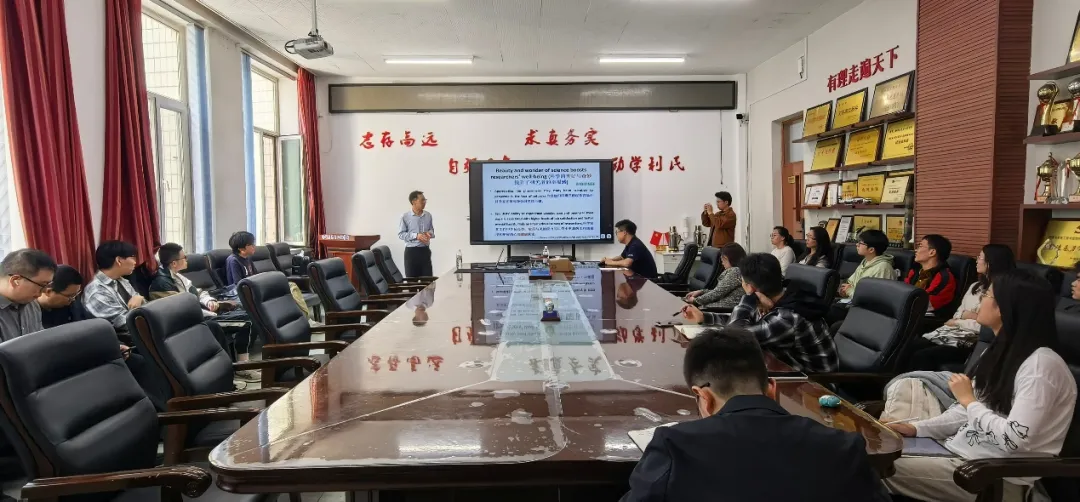
Professor Li Weihua has long been engaged in frontier research in fields such as block copolymer self-assembly and has achieved fruitful results in both academic innovation and graduate supervision. In his talk, Professor Li vividly narrated, through the real growth experiences of several graduate students he has supervised, the journey of an ordinary teacher growing together with students in a process of “mutual efforts.”
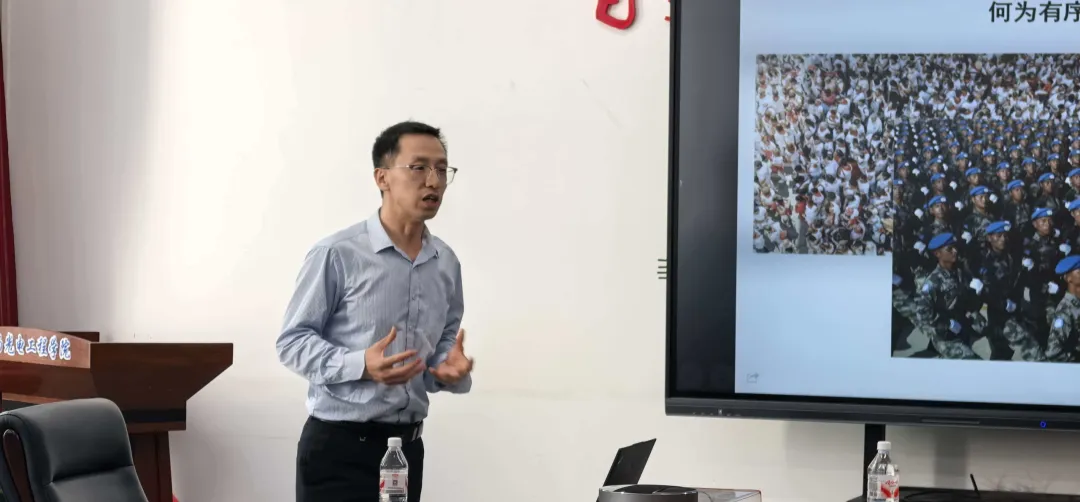
Focusing on the core topic of high-level graduate training, Professor Li shared practical experience in two key areas: first, how to stimulate students’ intrinsic initiative through timely guidance when they encounter research bottlenecks, helping them break through difficulties; second, how teachers and students jointly confront scientific challenges and achieve a series of innovative outcomes in cutting-edge fields. Through vivid and specific cases, Professor Li systematically articulated his “mutual growth” training philosophy—that a supervisor is not only a transmitter of knowledge and a guide in academic directions but also an igniter of students’ academic aspirations and a shaper of their research character. At the same time, every instance of student progress and breakthrough in turn pushes the supervisor to continuously reflect and refine their mentoring methods. Ultimately, teachers and students achieve mutual fulfillment through deep collaboration and advance toward excellence together.
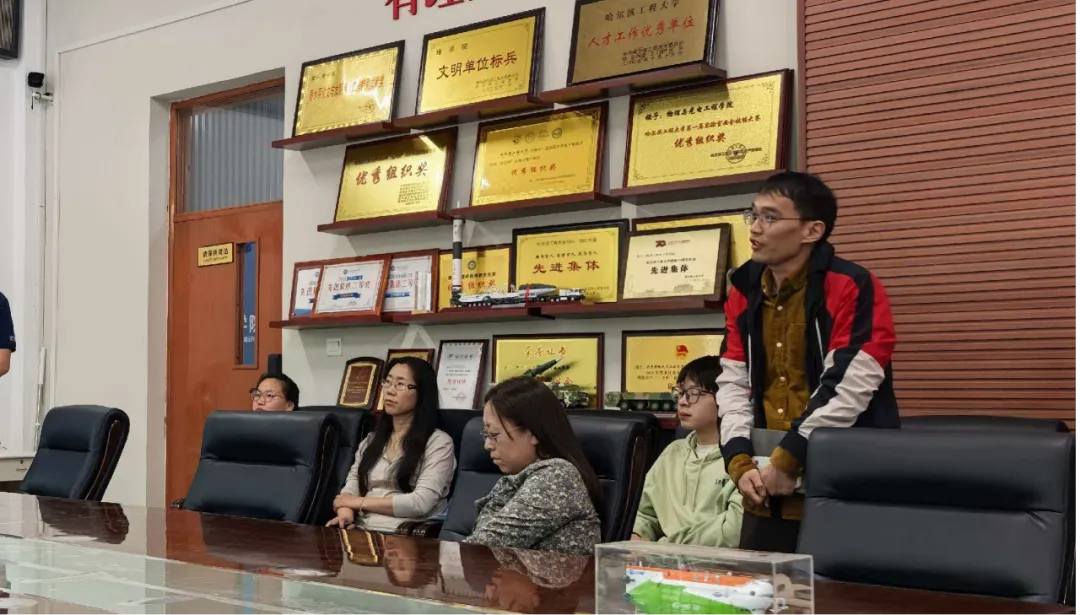
The lecture had a lively atmosphere, and attending supervisors engaged in in-depth exchanges with Professor Li on issues such as psychological guidance during graduate students’ research bottlenecks, the cultivation of academic norms, and the construction of supervisor-student relationships. Several young supervisors remarked that Professor Li’s talk possessed both theoretical depth and practical warmth, and that the concept of “mutual growth” was refreshing and highly inspiring for future graduate supervision work.
This lecture was an important initiative of the School of Physics and Optoelectronic Engineering to systematically advance the construction of the supervisor training system in accordance with the university’s unified deployment. In the future, the School will continue to rely on the Graduate Supervisor Development Sub-center, closely follow university requirements, and invite more high-level experts and scholars to promote the regular, systematic, and high-quality development of supervisor training, thereby providing solid support for cultivating high-level talents with both moral integrity and professional competence.