To fully leverage the exemplary and leading role of outstanding graduate students, assist them in clarifying their development direction, and enhance their academic and scientific research capabilities, the School of Physics and Optoelectronic Engineering recently held the "Walking with Light" Career Forum: National Graduate Scholarship Sharing Session. Master's and doctoral national scholarship recipients were invited to share their experiences, using their personal stories to discuss learning methods, scientific research training, and competition practices during graduate studies, providing replicable and learnable growth paths for graduate students.
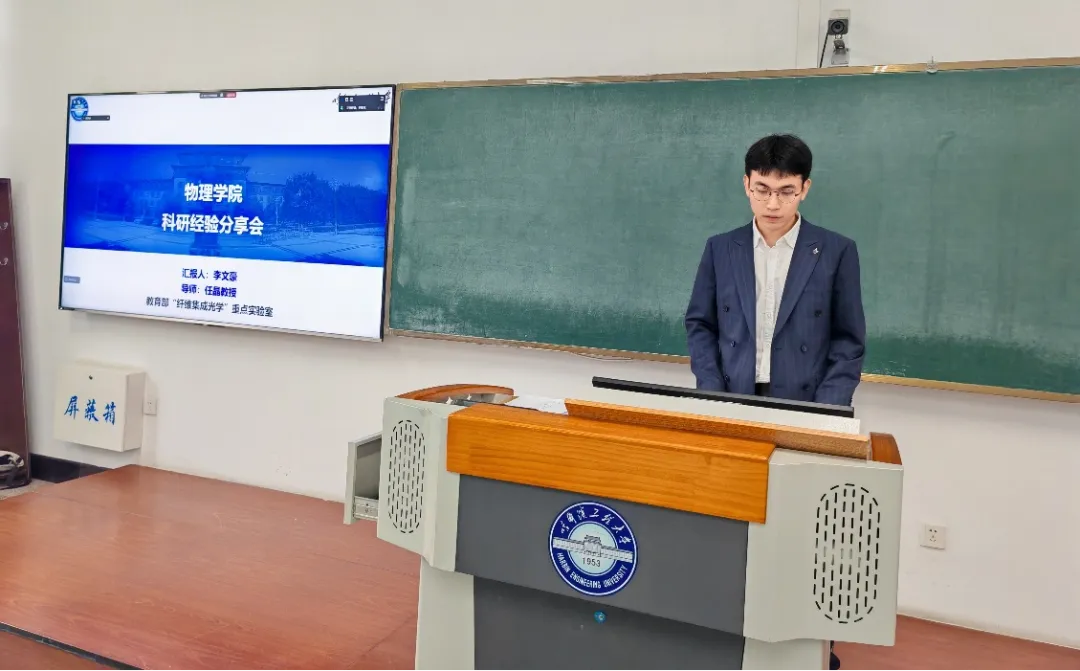
Li Wenhao mentioned that learning should transition from initial comprehensive coverage to focused breakthroughs after clarifying goals, making good use of available resources to solve problems efficiently. Scientific research should shift from moving step-by-step upon instruction to setting a destination and finding the path oneself, actively communicating with supervisors and senior fellow students, observing, asking, and learning more, reasonably utilizing AI and research tools, and regularly reporting experimental progress to the supervisor. Finally, regarding time management and mindset adjustment in learning, he emphasized that physical and mental health is the prerequisite.
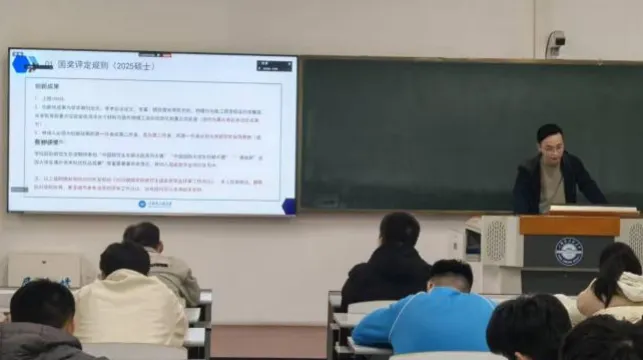
Gao Jun first helped everyone clarify the assessment rules for the national scholarship and, based on this, shared his personal planning and insights. He stated that in the first year of a master's program, one should focus on coursework while extensively reading literature to further understand the research direction of their group and consolidate foundational knowledge. In the second year, energy should be devoted to scientific research or competitions to enrich one's achievements. The third year should focus on resume preparation, optimization, and refinement.
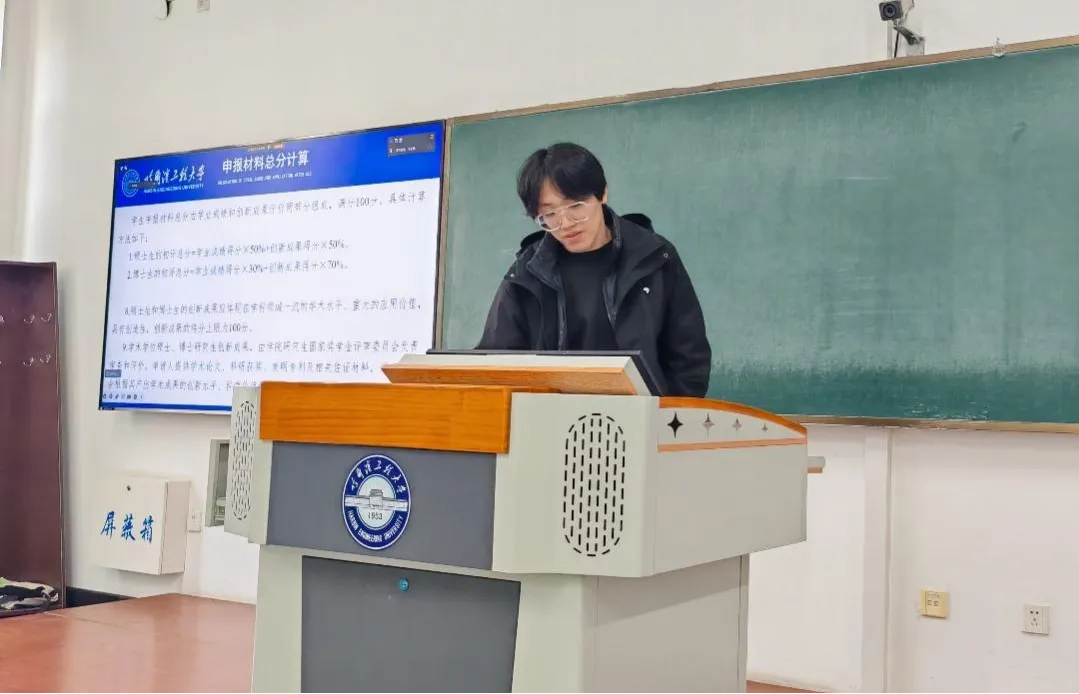
Huang Letian elaborated on methods and techniques for scientific research and study. He suggested that beginners can quickly get started by reading the dissertations of senior fellow students, establish their own literature library, regularly read the latest literature, and take good notes and summaries, which is the foundation for grasping research directions and inspiring innovation. Regularly review experimental progress, analyze the reasons for successes and failures, and promptly adjust research strategies and experimental plans. Simultaneously, he also offered advice to students from the perspective of daily life.
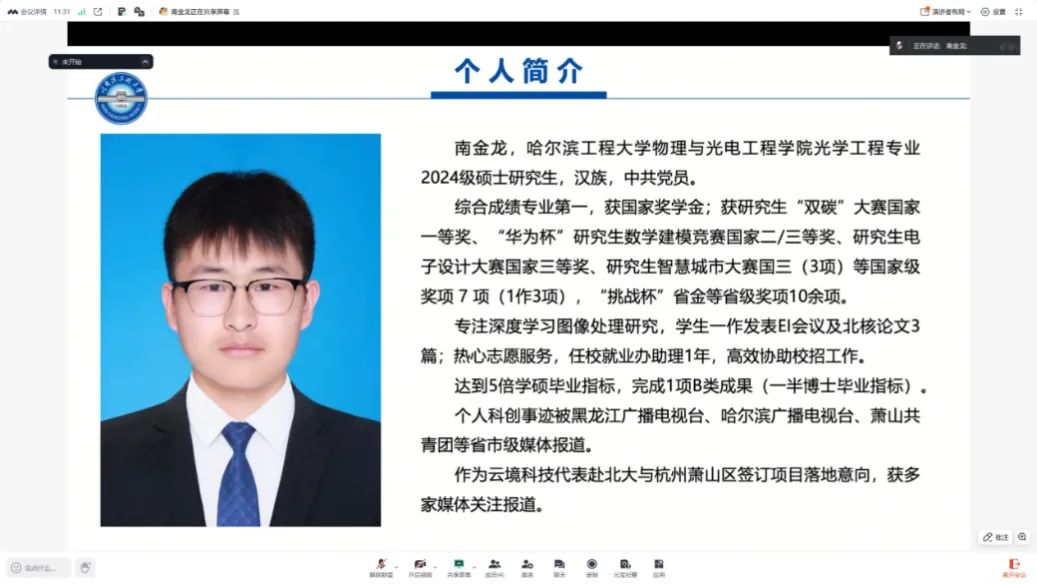
Nan Jinlong primarily shared his insights on employment and competitions, emphasizing the need for a clear time schedule. By formulating a time plan, one can clarify the path and make the most of every day in study and research. From the perspective of resume building, he proposed that "a resume is not built overnight; it needs to be written from the moment you enter the university," continuously improving it by identifying and filling gaps. Regarding competitions, he meticulously explained the key points for creating project presentations, particularly stressing the spirit of teamwork among members. With a sincere narrative, he provided practical and actionable experience references for the students present.
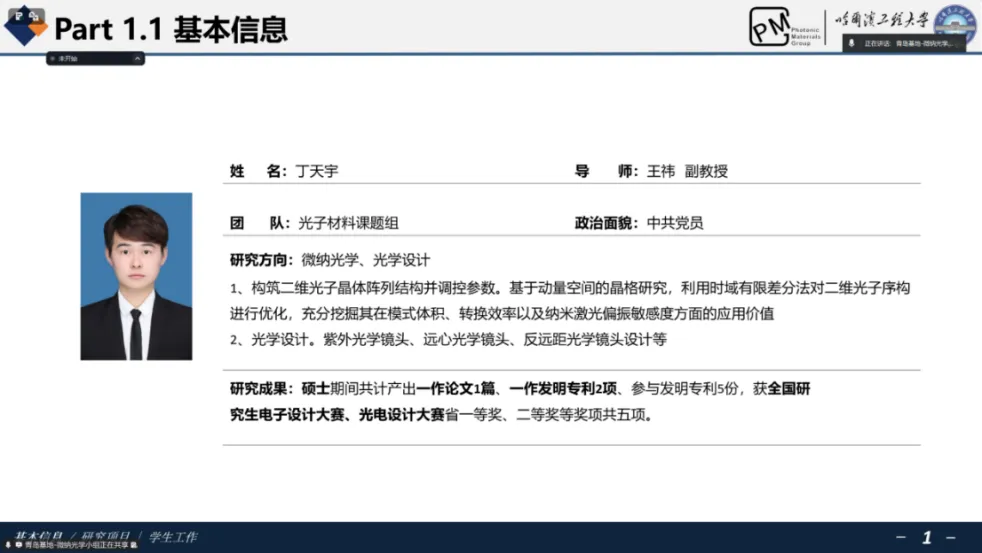
Ding Tianyu shared his experiences from two aspects: scientific research work and student work. He summarized scientific research into five key points: clear goals, trusting the supervisor, foundational accumulation, problem analysis, and result integration. He expressed that during graduate studies, one should clarify future development goals, listen to the supervisor's advice, read extensive literature along the research direction, and organize and analyze the problems encountered during the scientific research process. Simultaneously, he emphasized that individuals should pursue multifaceted development, actively participate in practical activities organized by the school, and improve their interpersonal and problem-solving skills.
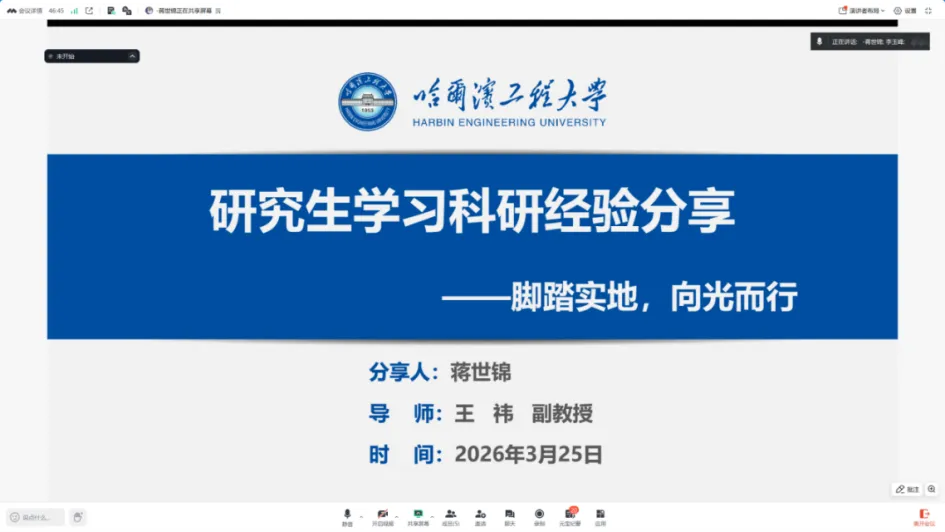
Jiang Shijin shared that scientific research should be based on literature reading to become familiar with one's research direction. After laying a solid foundation, one should gradually attempt experimental simulation execution and understand the reasons behind the results from it, shifting from "doing experiments" to "doing experiments with questions." He emphasized the importance of constructing the overall logic of the project, striving to connect structural design, experimental preparation, performance testing, and mechanism analysis, gradually forming a relatively complete research thread.
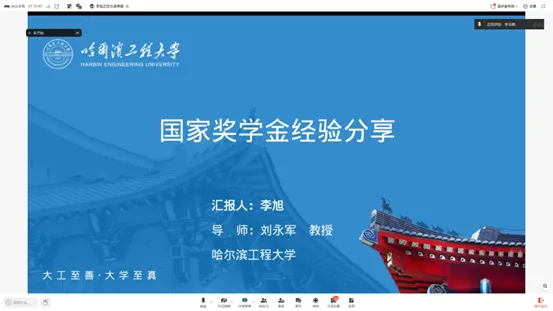
Li Xu, combining his own experimental experience, proposed a "three-step method" for experiments: First, clarify the experimental plan, specifying the phenomena to be verified or the experimental results to be replicated. Second, analyze results promptly, organize experimental data, perform preliminary visualization, visually display results through charts, and analyze the patterns behind the data. Third, adjust the experimental plan, distinguishing "anomalies" from "errors," and judging whether the current results truly require a plan adjustment rather than being random fluctuations.
This sharing session covered multiple dimensions including learning methods, scientific research capabilities, innovative practices, and comprehensive quality enhancement, providing both "methodologies" and "implementation checklists." Attendees expressed that they benefited greatly and would transform the shared content into phased goals and daily habits, further strengthening their foundation, enhancing scientific research output, actively integrating into the team collaboration atmosphere, and striving for continuous breakthroughs in their respective tracks. This event was not only a transmission of experience but also a spiritual inspiration, guiding students to stay determined and advance steadily on the path of scientific research.
The "Walking with Light" Career Forum is an exchange platform created by the School of Physics and Optoelectronic Engineering based on disciplinary characteristics to serve student growth, using the radiance of role models to illuminate the path ahead and the transmission of experience to guide the direction. By inviting industry experts, distinguished alumni, and outstanding teacher and student representatives to share authentic stories of struggle and growth insights around themes such as career development, scientific research breakthroughs, innovative practices, and grassroots contributions, it builds a dialogue space connecting campus and workplace, theory and practice, present and future. The platform is dedicated to helping current students broaden their horizons and scientifically plan their development paths, clarifying their striving direction while "pursuing light," and enhancing their comprehensive quality while "walking together," ultimately achieving the cultivation of top-tier innovative talents.