This "June 1st", Harbin Engineering University's School of Physics and Optoelectronic Engineering Prepares a Special Children's Day Gift for College Students — 20 Participating Teams from 19 Universities in Northeast China Joyfully "Break Through Levels" in the Wonderful World of Physics, Sparking Scientific Sparks with Wisdom and Creativity! What Kind of Sparks Will Fly When Rigorous Physics Academia Meets Innocent Childlike Innocence? Watching young students maintain curiosity about the world and explore the truth in competition may be the best answer.

On June 1, the 8th China Undergraduate Physics Academic Competition (Northeast Division) kicked off at the Qihang Academic Report Hall. Geng Jing, Assistant President of Harbin Engineering University and Executive Vice Dean of the Undergraduate School, Hao Chen, Secretary of the Youth League Committee of Harbin Engineering University, Zhang Yu, Member of the Executive Committee of the China Undergraduate Physics Academic Competition and Director of the Northeast Division Organizing Committee, Wang Yuxiao, Director of the Referee Committee of the Northeast Division of the China Undergraduate Physics Academic Competition, Liu Zhihai, Dean of the School of Physics and Optoelectronic Engineering of Harbin Engineering University, and Liu Lijing, Deputy Secretary of the Party Committee of the School of Physics and Optoelectronic Engineering, attended the opening ceremony. The opening ceremony was hosted by Jiang Haili, Vice Dean of the School of Physics and Optoelectronic Engineering of Harbin Engineering University.
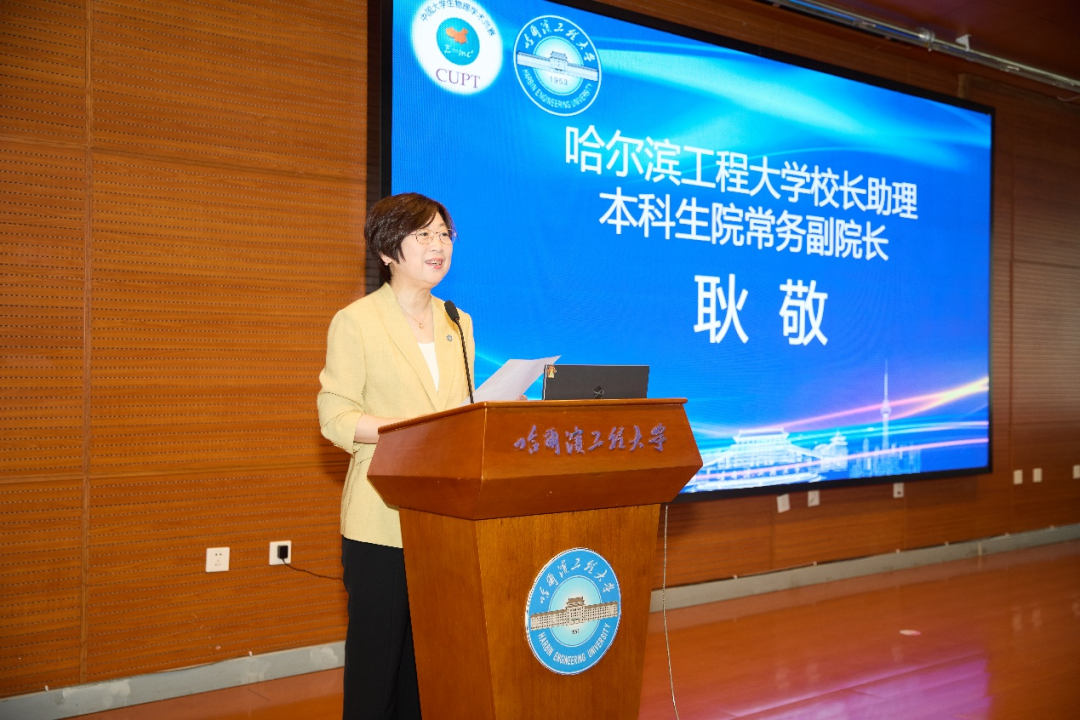
On behalf of Harbin Engineering University, Geng Jing extended a sincere welcome to the participating teachers and students. She stated that this competition requires not only rigorous thinking like scientific research, but also innovative courage to be the first. She hoped that the students would carry forward the academic style of "rigor, realism, diligence and innovation", temper the academic perseverance of "polishing a sword for ten years", promote the responsibility of the predecessors of Harbin Institute of Military Engineering of "daring to be the first in the world", and wished all teams achieve good results and show their elegance in the competition.
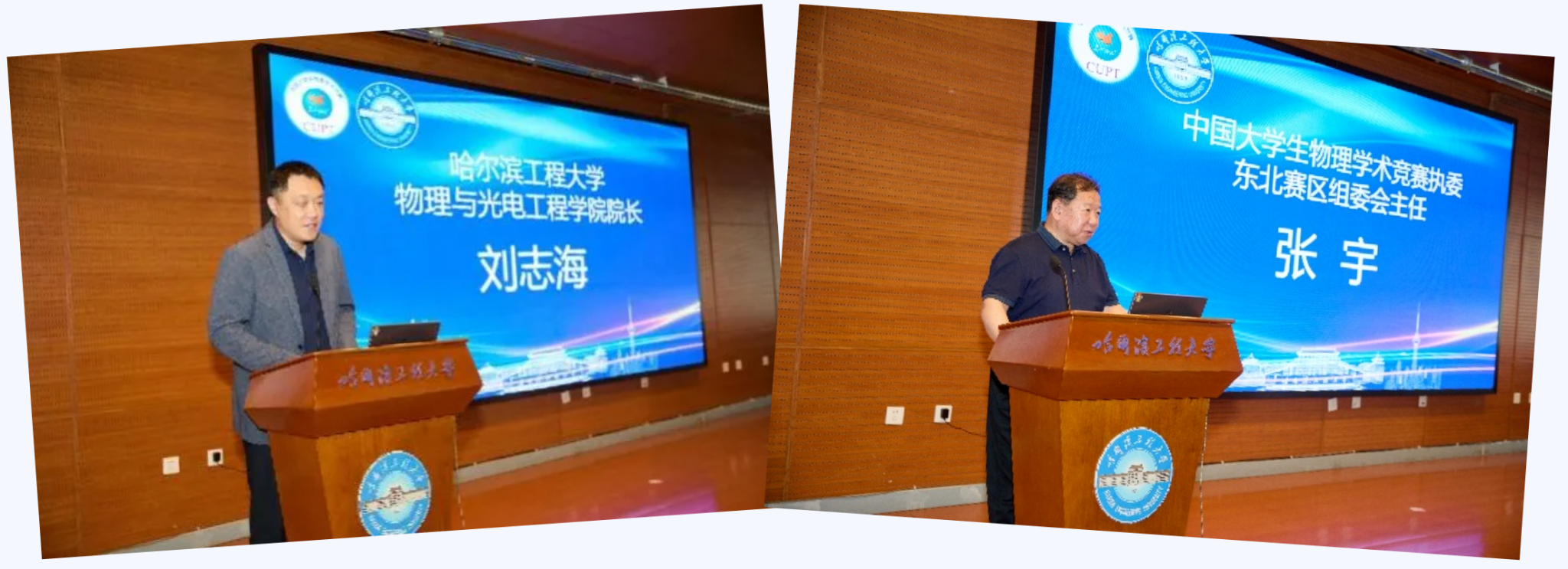
Liu Zhihai encouraged the contestants, "Every question debated on the field may become the starting point for scientific research breakthroughs tomorrow; every collision of ideas may nurture sparks of innovation." He hoped the students would carry forward the spirit of "studying things to attain knowledge", develop innovative thinking that breaks conventions, break disciplinary barriers, cultivate interdisciplinary perspectives, and cherish opportunities for teamwork. He emphasized that they should not only gain knowledge through teamwork but also forge like-minded academic friendships.
Zhang Yu pointed out that college students in the new era need to not only learn scientific knowledge but also develop scientific research capabilities, expression skills, and teamwork abilities. He hoped the students would take this competition as an opportunity to enhance friendships, strive hard, and carry forward the critical thinking and team spirit fostered in the competition into their future scientific research work.
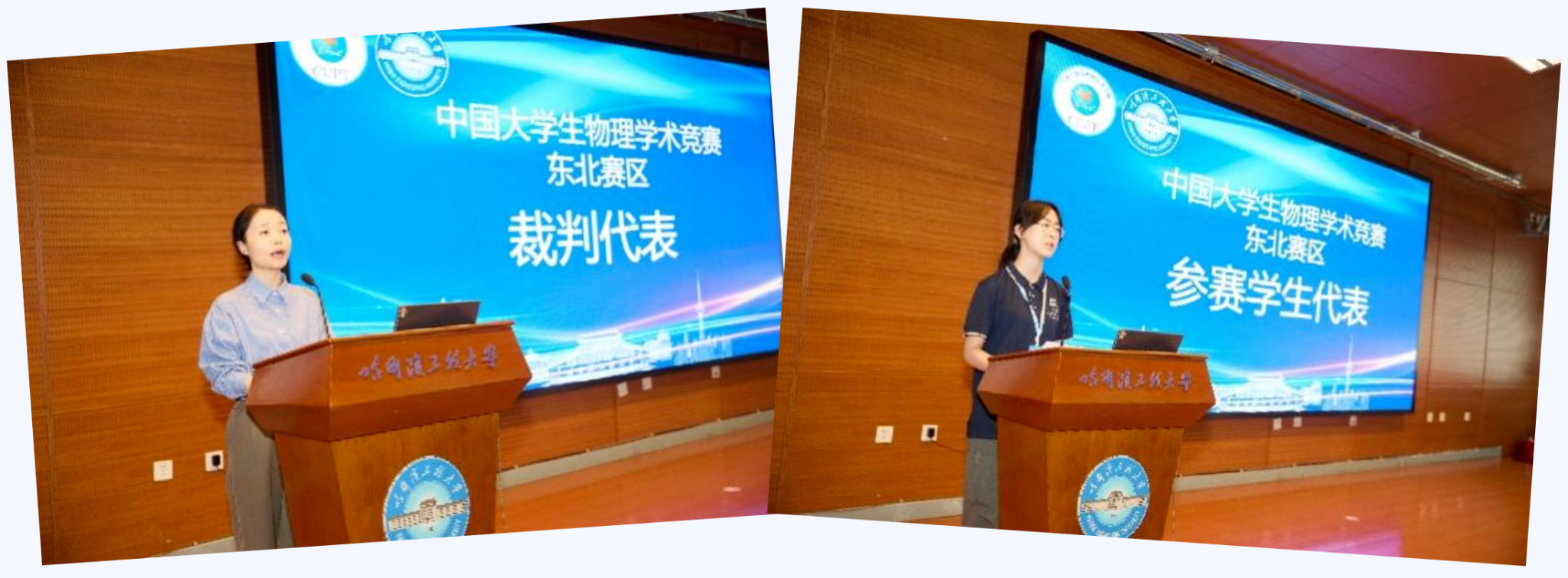
Teacher Liu Xiaoyu from the School of Physics and Optoelectronic Engineering of Harbin Engineering University, as the representative of the judges, promised that the competition would strictly abide by the principles of fairness, impartiality and openness in accordance with the rules and give the most fair scores. Wei Lijia from Harbin Engineering University, representing all the contestants, spoke and promised to treat every question and every experiment with the most sincere attitude. She would think independently and resolutely put an end to any form of cheating, and respect science, rules, and the hard work of judges and staff.
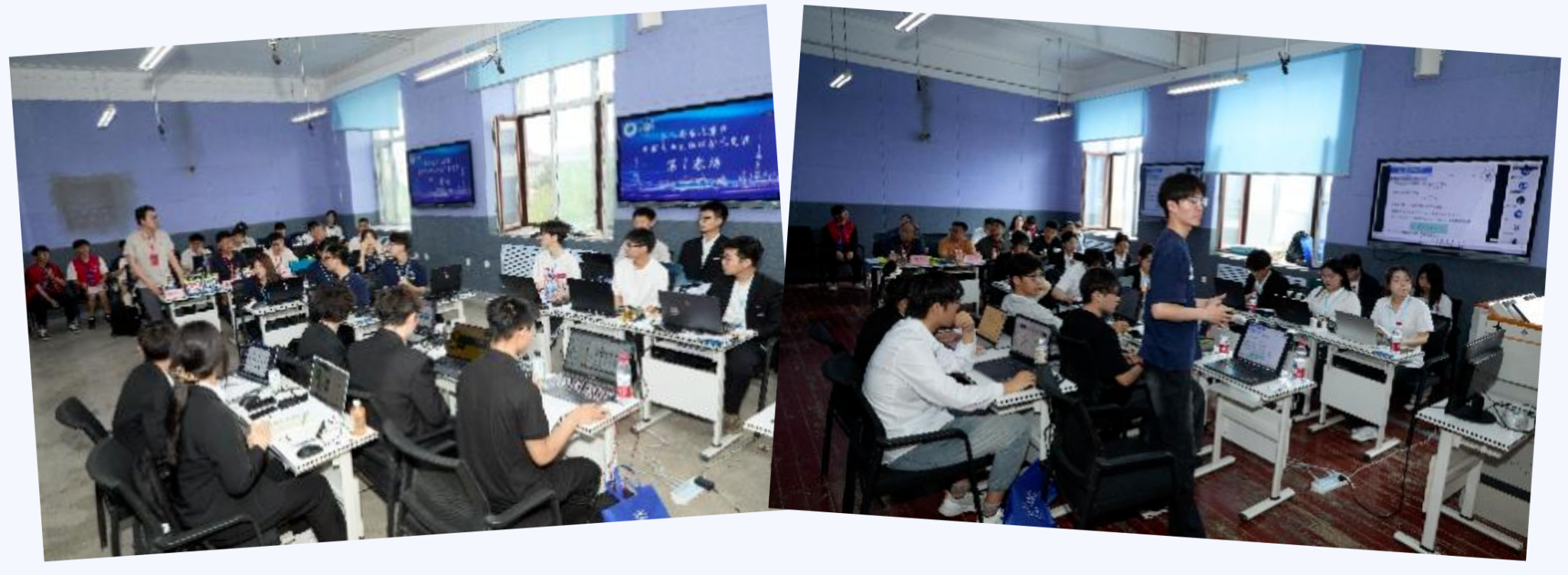
In this regional competition, 20 participating teams conducted theoretical derivation, experimental design, error analysis, and defense and discussion on conclusions around the topics. The competition consisted of four rounds, with each round held simultaneously in six venues and lasting for 2 days. Each venue had a pro-side, a con-side and a comment side, and the competition was conducted in the form of debate and comment. A total of 41 experts in the field of physics served as judges to give fair scores. After two days of wonderful competition, all participating teams fully demonstrated their profound professional knowledge of physics and a high sense of teamwork, performed excellently in the competition process, and presented a rich and wonderful academic feast for all teachers and students of the university.
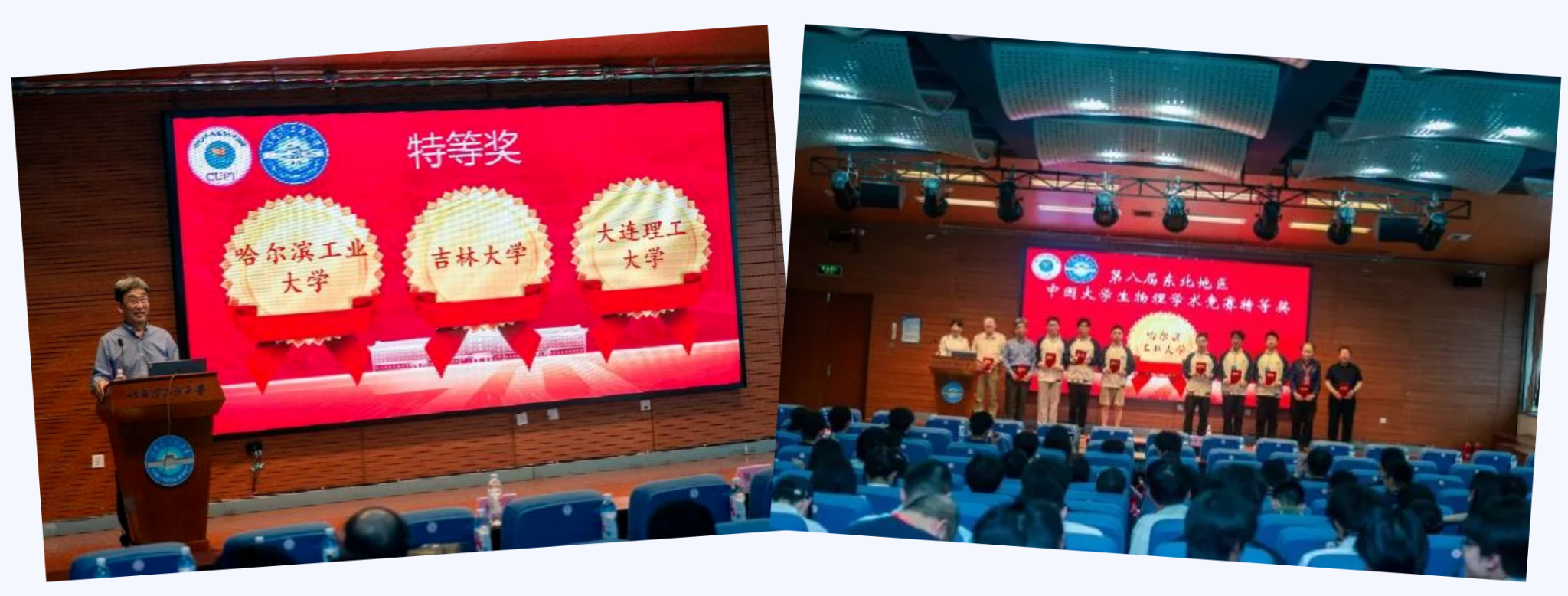
After two days of intense competition, Harbin Institute of Technology, Jilin University and Dalian University of Technology won the special prize. A total of 9 universities, including Harbin Institute of Technology, Jilin University, Dalian University of Technology, Harbin Engineering University, Changchun University of Science and Technology, Northeast Normal University, Shenyang Aerospace University, Beihua University and Harbin Normal University, advanced to the national competition. Meanwhile, the competition also selected 3 winners each for the Best Contestant Award, Best Female Contestant Award, Best Pro-Side Award, Best Con-Side Award and Best Commentator Award. The contestants also voted for the judges, and finally 5 teachers were selected as the Best Judges, namely Hou Chunfeng from Harbin Institute of Technology, Bai Hongliang from Dalian University of Technology, Lü Zhe from Harbin Institute of Technology, Feng Lifeng from Harbin Normal University and Zhang Shoutao from Northeast Normal University.
The successful holding of the 8th Northeast China Undergraduate Physics Academic Competition has not only built a practical platform for students from universities in Northeast China to collide ideas and temper abilities, but also vividly interpreted the educational reform concept of "promoting learning through competitions and encouraging innovation through competitions" in the new era. With solid academic foundation and innovative scientific thinking, all participating teams have demonstrated the demeanor of contemporary young scientific and technological talents, and also injected youthful momentum into accelerating the construction of a powerful education country and serving the Northeast revitalization strategy. In the future, the School will continue to give play to its disciplinary advantages, deepen regional educational cooperation, and make greater contributions to promoting the cultivation of innovative talents in the field of physics and the self-reliance and self-improvement of high-level science and technology.